Stop Trying to Beat the Odds. Start by Knowing Yourself.
Every spring, panic over plunging acceptance rates moves through high school hallways. Here's a different starting point — one I've watched change everything.
7 min read
 Kevin BarrettKevin Barrett
Every spring, a familiar panic moves through high school hallways. Acceptance rates at the famous schools drop again. The headlines shout. And a generation of seventeen-year-olds quietly concludes that their future depends on beating odds that look impossible.
I want to offer you a different starting point — one I've watched change everything for the students who take it seriously.
Stop trying to beat the odds. The odds are the wrong thing to be looking at.
First, the reassuring truth, because it's real and you deserve to hear it. The "impossible admissions" narrative is built almost entirely on a tiny handful of hyper-selective schools — roughly fifty to a hundred of them. Yes, Harvard and Caltech now admit around 3-4% of applicants. Yes, schools once considered accessible have tightened.
Published on June 24, 2026
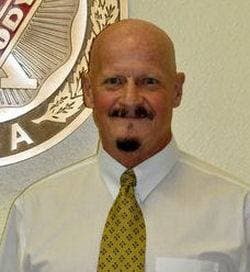
Kevin Barrett
Creatrepreneur, Owner at KJ Barrett & Associates, Owner at The Creatrepreneur
Qoollege.com Strategist and Board of Advisors
About Me
Creatrepreneur Pioneer | Global Innovator in Education & Business | Transforming Learning & Growth for Over 35 Years
Summary
As a lifelong learner and pioneer of Creatrepreneurship, he has dedicated over 35 years to transforming education and business through innovative solutions. His journey spans teaching diverse subjects at a private high school, coaching multiple sports, and consulting with a global clientele—from Fortune 500 companies to startups like Qoollege.com, where he serves on the Board of Advisors.
His business career started with working for 3M. There he had multiple positions in Manufacturing, Research & Development, Marketing, Business Development and International. This diverse experience reflects his commitment to fostering growth and innovation across industries and cultures.
At the heart of his approach is the SOULutions Framework—Shared Humanity, Overcoming Trauma, Unity of Purpose, and Long-Term Interdependency. This philosophy drives his work in developing cutting-edge educational programs and business strategies that foster sustainable growth and meaningful impact. Through KJ Barrett & Associates, he has helped businesses worldwide implement AI-driven solutions, optimize sales and marketing strategies, and build customer loyalty ladders. His Creatrepreneurial mindset, blending creativity with entrepreneurship, has been instrumental in developing new products and services that address evolving market needs.
But that's not the landscape. That's a spotlight on one small corner of it.
The actual average acceptance rate at four-year non-profit colleges in the U.S. is about 73%. For public colleges it's around 78%. The vast majority of excellent American colleges admit at least half of the students who apply — and by several measures, it has gotten easier to get into most of them over the past decade, not harder. There are hundreds of outstanding universities, with strong programs and real scholarship money, that would be genuinely glad to have you.
So the panic, for almost everyone, is a response to a story that isn't actually about them.
But here's the deeper problem — and it's the one almost no one names.
Even "the odds are better than you think" still accepts the premise that this is a numbers game. It tells you to look outward — at acceptance rates, at what will impress, at where you rank against everyone else.
That outward gaze is exactly the trap.
Because here's what's really happening to you right now: you're being asked to make one of the largest decisions of your life so far, and it has arrived pre-loaded with other people's agendas. A parent's anxiety about prestige. An alumnus's loyalty to their school. A coach's dream of a Division I roster. A magazine's ranking that someone invented to sell magazines. Every one of those voices is pushing you toward a decision point — and most of them aren't yours.
Let me say something I believe matters, and that few people will say to you directly: you are being asked, at seventeen, to optimize against pressures you are not yet equipped to sort out. Not because you're not smart enough — because no one at seventeen has had much practice separating their own true voice from the loud, loving, well-meaning crowd around them. That's not a flaw in you. That's the actual difficulty, and naming it is the first relief.
I want to be careful here, because this is easy to get wrong.
Your parents, your coaches, the alumni in your life — they are not the enemy. The pressure they put on you almost always comes from love and from their own fear of seeing you struggle. That matters, and it deserves your respect. The adults who love you are worth listening to.
But there is one question they cannot answer for you, no matter how much they love you: who are you, and what do you actually want?
Only you can answer that. And here's the part that should lift a weight off your shoulders — the adults who genuinely love you want you to answer it yourself. A good parent doesn't actually want you to live their dream. They want you to find yours. Sometimes they just need to be reminded of that — and sometimes you need to know yourself well enough to tell them.
This is the reframe that changes everything. Before you build a college list, before you look at a single acceptance rate, do the harder and more valuable work first: get clear on who you are and what you want.
And I don't mean that as a greeting-card slogan. I mean it as the literal first step of the search — and it's more rigorous than staring at rankings, not less. Self-knowledge, made concrete, looks like honest answers to questions like:
When you can answer those, something remarkable happens. The college list stops being a guess built on prestige and panic, and becomes an output of clarity. You're no longer asking "where can I get in?" You're asking "where will I become who I'm trying to become?" — and that question has real, findable answers.
Here's the part that should make the anxiety release its grip: knowing yourself first doesn't lower your sights. It produces a better result, measured the only way that matters — best fit.
A balanced list still matters — a few reach schools you're genuinely excited about, a solid core of match schools where your profile makes you competitive, and safety schools you'd actually be happy to attend. But when that list grows out of real self-knowledge instead of someone else's ranking, every school on it is a place where you would thrive. There's no such thing as a "backup you'd be ashamed of" when the whole list reflects who you actually are. Every outcome becomes a good outcome.
That's how you "beat the odds." Not by gaming a number, but by changing the game — from a high-stakes lottery you're trying to win, into a deliberate search for the place that fits the person you are. The student who does that walks into senior year calm, because they're not chasing approval. They're choosing a life.
Notice that the first step isn't a search tool. It's a page and twenty quiet minutes.
Write before you search. Answer the five questions above, honestly, on paper. No one else reads it. This is the foundation everything else gets built on.
Name the borrowed voices. Write down whose expectations you've been carrying. Just naming them loosens their grip.
Then, and only then, gather your data. Your honest GPA, your course rigor, a baseline test score — the facts about where you actually stand.
Now build a list that reflects you. With self-knowledge first and data second, search for schools by the things that actually fit — environment, program, size, cost, and a realistic admissions range — not by prestige.
When you're ready for that fourth step, Qoollege's University Search tool can filter thousands of U.S. colleges by the criteria that fit the person you've just gotten honest about — acceptance range, academic profile, location, size, major, and cost. But the tool serves the clarity. The clarity comes first, and it comes from you.
Because the real key — and I've watched this prove true more times than I can count — is this: know yourself first, and the rest falls into place. The result won't be the school that impresses the most people. It'll be the one that fits you.
And that, in the end, is the only acceptance that matters.
[Author Name] is a [counselor/advisor] with Qoollege. [One-line bio establishing real experience — years advising, students guided, a specific perspective on fit-over-prestige.]
A note on the numbers: admissions data, acceptance rates, and financial-aid policies change every year. Always verify current figures and deadlines on each college's official website before relying on them.
As a “Life Long Learner” he has taken 50 Plus continuing education programs from top-tier universities, covering a wide range of subjects. Education and learning is one of his passions.
Another of his passions is contributing back into the community. He has served on the Board of Directors at the YMCA and on the Greater Tampa YMCA oversight committee, with a focus on helping kids realize their potential.
In education, he has pioneered programs that integrate NLP, Hypnosis, The Silva Method, and binaural beats to enhance learning outcomes. As a teacher and coach, he has applied these techniques to empower students and athletes, achieving remarkable results in both academic and athletic performance.
He is a multiple sport coach with Back to Back State Championships in football, four State Championships in AAU basketball qualifying for Nationals, and experience as a Soccer Coach for Boys and Girls Varsity and Middle School, a Track Coach, a Cross Country Coach. He also has in-depth knowledge of coaching swimming, tennis, and rugby.
His role as a Board Advisor for Qoollege.com, an exciting edtech startup, allows him to merge his passion for education with cutting-edge innovation, creating solutions that make learning more accessible and effective.
With a career spanning Australia, the USA, Europe, and extensive travel across the Pacific Rim, Asia, Africa, and South America, he brings a truly global perspective to every project. This international experience has been invaluable in developing culturally-sensitive and universally applicable solutions. He is excited to share these insights and collaborate with forward-thinkers.