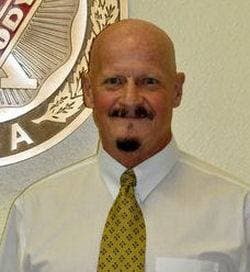
The NCAA rewrote its eligibility rules in June 2026 — a five-year, age-based clock that, for the first time in years, reaches back into high school. Former Assistant Athletic Director Kevin Barrett lays out a clean, year-by-year map of what athletes must hit from grade 9 through 12, and the exact points where families quietly lose a season.
9 min read
Kevin Barrett
The Four-Year NCAA Eligibility Map
What every Athletic Director needs their athletes to hit — and the points where they slip
From the Desk of Kevin J. Barrett · Coach · Former Assistant Athletic Director
If you run an athletic department, you already know the quiet math: a kid can do everything right on the field for four years and still lose a season to a core-course box nobody checked in ninth grade.
I spent years on the operations side of a private school — eligibility flags, transcripts, physicals, the grades-at-risk reports, the whole unglamorous machinery. And the eligibility surprises almost never came from the talented kids who weren't trying. They came from the ones nobody was tracking until it was late.
About the Author
Kevin Barrett
Published on August 13, 2026
Kevin Barrett Creatrepreneur, Owner at KJ Barrett & Associates, Owner at The Creatrepreneur Qoollege.com Strategist and Board of Advisors
About Me
Creatrepreneur Pioneer | Global Innovator in Education & Business | Transforming Learning & Growth for Over 35 Years
Summary
As a lifelong learner and pioneer of Creatrepreneurship, he has dedicated over 35 years to transforming education and business through innovative solutions. His journey spans teaching diverse subjects at a private high school, coaching multiple sports, and consulting with a global clientele—from Fortune 500 companies to startups like Qoollege.com, where he serves on the Board of Advisors.
His business career started with working for 3M. There he had multiple positions in Manufacturing, Research & Development, Marketing, Business Development and International. This diverse experience reflects his commitment to fostering growth and innovation across industries and cultures.
At the heart of his approach is the SOULutions Framework—Shared Humanity, Overcoming Trauma, Unity of Purpose, and Long-Term Interdependency. This philosophy drives his work in developing cutting-edge educational programs and business strategies that foster sustainable growth and meaningful impact. Through KJ Barrett & Associates, he has helped businesses worldwide implement AI-driven solutions, optimize sales and marketing strategies, and build customer loyalty ladders. His Creatrepreneurial mindset, blending creativity with entrepreneurship, has been instrumental in developing new products and services that address evolving market needs.
Ready to start your college journey?
Join thousands of students using Qoollege to find their perfect college match and achieve their academic dreams.
This is the map I wish I'd had to hand families on day one. It isn't for you to run — you don't have the hours. It's a clean year-by-year guide you can put in your athletes' and parents' hands, with a note from me at each stage on where, in my experience, kids actually fall off.
One thing before the map: the rules changed this summer. If you're working from a version of this guide you printed last year, replace it.
First, what changed in June 2026
On June 23, 2026, the NCAA Division I Cabinet unanimously approved an age-based eligibility model, finalized the following day. It replaces the structure college sports ran on for decades — four seasons of competition inside a five-year window — with something simpler and, for most of your athletes, better: five years of competition inside a five-year clock.
The part that matters for a high school office is when the clock starts. Under the new model, an athlete's eligibility clock begins with full-time college enrollment or the academic year after their 19th birthday — whichever comes first.
Read that twice, because it quietly rewrites some familiar advice. Redshirt years, injury waivers, and most eligibility extensions are eliminated; the exceptions that remain are narrow — military service, pregnancy, and religious missions. The NCAA Eligibility Center is administering the age-based certification for students enrolling in fall 2026 and beyond.
From the field:This is the first eligibility change in years that reaches back into high school. A reclassification, a postgraduate year, a gap year, a late start — any of it can now burn a season of college eligibility before the athlete ever sets foot on a campus, because the clock runs on age whether or not the athlete is enrolled. Families making that decision for athletic reasons need this conversation before they make it, not after. That conversation belongs in your office.
Grade 9 — Freshman Year: Laying the Foundation
The clock starts on day one. Grades and course choices from the very first semester count toward final NCAA eligibility — a fact most freshmen and plenty of parents don't realize until it's too late to fix cheaply.
Meet with the school counselor early. Ask for your high school's NCAA-approved core course list — counselors know it as the 48-H form. That single list drives everything that follows, and plenty of classes families assume count simply don't.
Map a four-year academic plan. Division I and Division II both require 16 core courses: four English, three math (Algebra 1 or higher), two natural or physical science, one additional English/math/science, two social science, and four more from any approved area. Aim for at least four core courses a year so there's no scramble as a senior.
Protect the GPA from the first report card. The minimum core GPA is a floor, not a target. A strong freshman year makes the next three far easier.
Start a records folder. Digital or physical — transcripts, test information, athletic achievements, all in one place.
From the field:The freshman slip is invisible. A counselor steers a kid into a course that doesn't count as an NCAA core, and nobody notices for two years. The fix is one conversation in September of ninth grade. The athletes who lose eligibility here are almost always the ones whose families didn't know the question to ask.
Grade 10 — Sophomore Year: Building Momentum
This is the year to lock in academic standing and start the official paperwork.
Register with the NCAA Eligibility Center. Create a free Profile Page at eligibilitycenter.org. Athletes actively recruited at the Division I or II level transition later to a paid Certification Account.
Audit core-course progress. Confirm with the counselor that completed courses appear on the approved list and the athlete is tracking toward all 16.
Take the PSAT as a low-stakes practice run. The NCAA hasn't required a test score since 2023 — but many colleges and most academic scholarships still do, and testing requirements have been returning across higher education. The PSAT surfaces gaps early and keeps doors open.
Keep the grades climbing. Core-course GPA is now the whole ballgame for academic qualification.
From the field:Sophomore year is where the Profile Page versus Certification Account confusion costs families money and time. The rule of thumb: a free Profile Page is fine until a Division I or II program is actively recruiting. Don't push families to pay before they need to.
Grade 11 — Junior Year: The Critical Year
Academically, this is the highest-leverage year in the whole map. Get it right and senior year is a formality.
Hit the core-GPA minimums. A 2.3 core GPA for Division I, 2.2 for Division II — calculated from approved core courses only, not the full transcript. Monitor it course by course.
Clear the 10/7 Rule for Division I. Ten core courses must be complete before the seventh semester begins, and seven of those must be in English, math, or natural/physical science. Once senior year starts, those ten grades are locked — a retake can't improve them for eligibility purposes.
Know that Division II is different. There is no 10/7 requirement at the DII level; all 16 core-course grades remain improvable through senior year. For an athlete who had a rough start academically, that flexibility can be the whole difference — and it's worth naming out loud in a recruiting conversation.
Update the transcript. After junior year, have the counselor upload the official transcript to the Eligibility Center account.
Decide on the SAT/ACT strategically — not for the NCAA. This is now an admissions and scholarship decision. Plan around the schools the athlete is targeting, not around the NCAA.
From the field:The 10/7 Rule is the single most common eligibility killer I've seen. A junior who's a course or two short going into senior year often can't make it up — there aren't enough semesters left. And because the grades lock, the usual fix of "retake it and bring the GPA up" simply doesn't work here. Spot this in the fall of junior year, not the spring of senior year.
Grade 12 — Senior Year: Finishing Strong
Final stretch. The job now is closing out academic requirements and finalizing certification.
Finish the final core courses with strong grades. No coasting — final-semester slippage can still pull a borderline GPA under the line.
Take or retake the SAT/ACT only if a target college or scholarship requires it. An admissions and money decision now, not an NCAA one.
Complete final amateurism certification. For fall enrollees this opens April 1 of senior year; the athlete logs into the Eligibility Center account and answers the final amateurism questions. It cannot be done early.
Graduate on time, with the class. On-time graduation with the cohort is itself an eligibility requirement.
Send the final transcript with proof of graduation. After graduation, the counselor uploads the final official transcript to the Eligibility Center.
Check the age-based clock. For athletes enrolling in fall 2026 and beyond, the Eligibility Center is now certifying the period of eligibility under the age-based model alongside academic and athletics certification. If an athlete's path to college involves any delay, confirm what it costs before it's committed to.
From the field:Two senior-year details get missed constantly — the April 1 amateurism step, which can't be done early, and the final transcript upload after graduation. That file sits incomplete all summer and the athlete arrives on campus uncertified. A reminder from the AD's office in April, and again in June, closes both gaps. It takes four minutes and I have watched it save seasons.
Why I'm sending this
Staying eligible is the first play in a young athlete's college journey, and most eligibility losses are preventable with a calendar and a couple of well-timed conversations. I built this because I've watched good kids lose seasons to paperwork — and an athletic director's office is the one place positioned to catch it early.
Share this freely. Forward it, print it, put it in the team newsletter, hand it to every family on your roster. That's what it's for.
I'll keep sending resources like this — practical, current, and worth the few minutes. No pitch attached.
A note on tools: I serve on the advisory board of Qoollege, a college-prep platform that helps families track core-course progress, deadlines, and college matching in one place. If you or your families use it through a link I share, I may earn a referral commission. I'm telling you that plainly because you deserve to know, and I only point people to tools I'd have used myself in an athletic department.
Kevin J. Barrett has spent four decades helping young people find their path — as a teacher, mentor, former Assistant Athletic Director, and multi-sport coach whose teams won back-to-back state football championships and four AAU basketball state championships. A business consultant since 1988, he writes at thecreatrepreneur.com.
kevin@kjbarrett.com
Sources
NCAA.org, Division I Initial-Eligibility Requirements — 16 core courses, 10/7 progression, 2.3 core GPA, final transcript and proof of graduation.
NCAA.org, NCAA Division I Age-Based Eligibility Rules: Eligibility 101, June 23, 2026 — five-year model; clock begins at full-time enrollment or the academic year after the 19th birthday; Eligibility Center certification for fall 2026 enrollees and beyond.
ESPN and NBC Sports, June 23–24, 2026 — Division I Cabinet unanimous approval; elimination of redshirt and extension waivers except military service, pregnancy, and religious missions.
NCAA Eligibility Center, Initial-Eligibility Standards brochure — Division II 2.2 core GPA; Division III campus-set standards.
Facts verified August 5, 2026. NCAA rules change annually and the age-based model is still being implemented — confirm current requirements at eligibilitycenter.org before acting on any individual case.
As a “Life Long Learner” he has taken 50 Plus continuing education programs from top-tier universities, covering a wide range of subjects. Education and learning is one of his passions.
Another of his passions is contributing back into the community. He has served on the Board of Directors at the YMCA and on the Greater Tampa YMCA oversight committee, with a focus on helping kids realize their potential.
In education, he has pioneered programs that integrate NLP, Hypnosis, The Silva Method, and binaural beats to enhance learning outcomes. As a teacher and coach, he has applied these techniques to empower students and athletes, achieving remarkable results in both academic and athletic performance.
He is a multiple sport coach with Back to Back State Championships in football, four State Championships in AAU basketball qualifying for Nationals, and experience as a Soccer Coach for Boys and Girls Varsity and Middle School, a Track Coach, a Cross Country Coach. He also has in-depth knowledge of coaching swimming, tennis, and rugby.
His role as a Board Advisor for Qoollege.com, an exciting edtech startup, allows him to merge his passion for education with cutting-edge innovation, creating solutions that make learning more accessible and effective.
With a career spanning Australia, the USA, Europe, and extensive travel across the Pacific Rim, Asia, Africa, and South America, he brings a truly global perspective to every project. This international experience has been invaluable in developing culturally-sensitive and universally applicable solutions. He is excited to share these insights and collaborate with forward-thinkers.
 Kevin Barrett